Our world is on track to pass 8.3 billion people, having doubled in the last 50 years. Against that backdrop, the sustainability debate cannot rely on impractical idealism; we still need to ensure that a large share of the world's population, and clearly in Argentina too, can access the basics: housing, food, energy, and transport. We cannot simply stop extracting minerals, producing concrete, or halting infrastructure construction.
The "why" is obvious: everyone wants to live better, and there is no stopping that. What we can control, and must work on, is the "how". We need solutions that enable more inclusive progress without compromising future generations' right to do the same. That the definition of sustainability itself.
This is the starting point: demystifying sustainability as a luxury for wealthy countries or a partisan stance. My aim is to depoliticise how we look at reality, prioritising scientific consensus and an engineering mindset. The paradigm shift is recognising that today's world is not static; people like us built it, and it is now in our hands to optimise it.
Key Takeaways
- 1.
Sustainability should be treated as a boundary condition of system design, not an ethical extra.
- 2.
Life-cycle assessment shows that a returnable container can beat single-use packaging on carbon footprint after enough reuse cycles.
- 3.
Without a clear regulatory framework, producers rarely take on the risk of innovating toward the most material-efficient option alone.
For sustainability to be viable, it must be a necessary condition of any public policy, grounded in logic rather than emotion alone. To see how that optimisation works, we can distinguish between three actors: you as an individual (consumer), the private sector (business), and the state (regulator).
To make it concrete, consider a practical case: What if Argentina eliminated single-use plastic in beverages entirely?
We already have a clear example: the one-litre retornable beer bottle (or 970 cc for the perfectionists). Having travelled in many countries, I am always struck by how rare this system is elsewhere. It is a perfect illustration of a far more material-efficient system that works in practice without a major loss of convenience for the user. We are so used to it that we hardly think about it.
Let us see whether scaling this up makes sense from a multidisciplinary angle.
Economic and environmental analysis (life cycle)
Economically, the returnable bottle is a direct saving. The price gap is clear: buying the returnable package is usually much cheaper because material savings more than offset the logistics of returning the bottle.
Environmentally, if we use tools such as Life Cycle Assessment (LCA) and take carbon footprint ($gCO_2$) as the metric, we see that beyond a certain number of uses, the returnable bottle is unbeatable.
What is interesting is that if we replace the $gCO_2$ unit with currency ($\$$), the chart becomes a cash-flow view. What is better for the planet becomes a tangible economic benefit. If we priced indirect costs (health from microplastics, river clean-up, waste collection) into disposables, the gap would be much wider.
The role of actors and inertia as a barrier to change
If the benefit is so clear, why does change not happen on its own? Here the roles matter:
- The consumer: Although demand-side power exists, the group is fragmented. We cannot expect every citizen to be an expert on each product's life cycle. Consumers often choose convenience or whatever is easiest in the moment; their leverage is limited against system inertia.
- The producer: The job is to maximise profit. Innovating toward sustainability can put a firm at a disadvantage versus a competitor that does not; especially when markets reward quarterly earnings over long-run efficiency.
- The state: This is where real leverage appears. The state does not need to micromanage production, but it can—and often must—set the rules of the game.
In the end, the actor that can change how things are produced and how much impact that creates is the producer. Often the issue is simply a lack of incentive; innovating without a clear framework is a risk markets rarely forgive.
If the state banned non-returnable containers, it would force the private sector to innovate in that direction. As the rule of the game, competition would shift to who builds the most efficient collection system, the best return machines, more durable materials that preserve taste, and so on. The initial friction (the convenience of throwing the bottle away) would be overcome by a system designed for efficiency.
Sustainability is the boundary condition that defines the optimal system solution without sacrificing future generations.
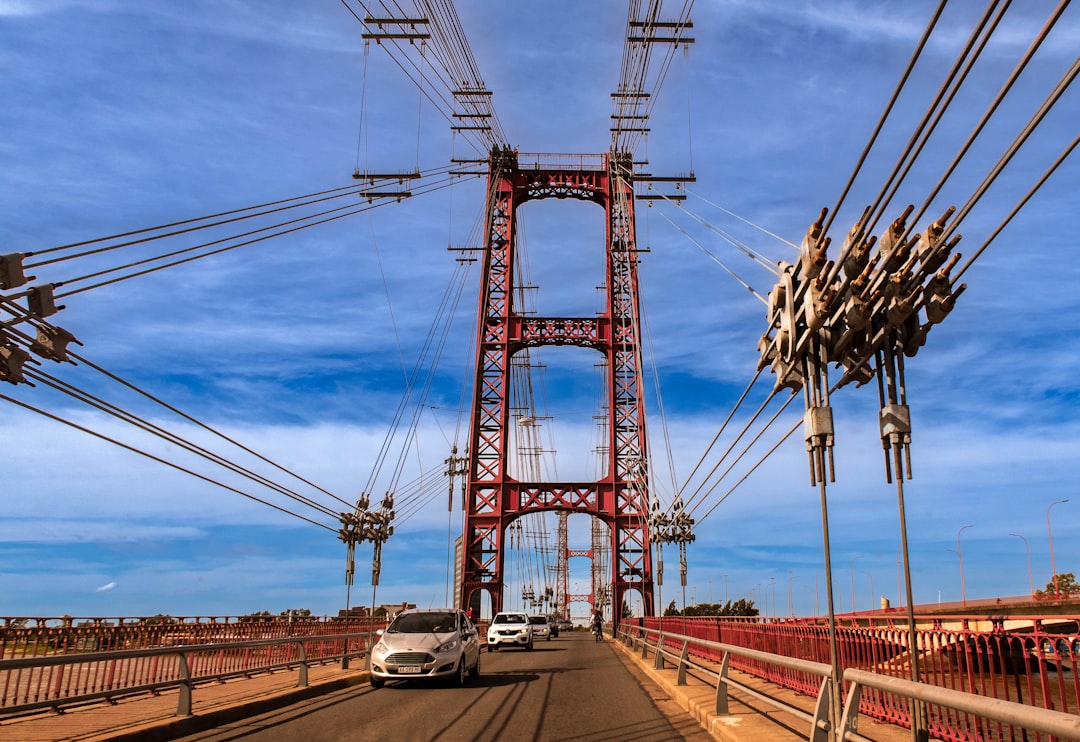
In engineering, equations are only solvable once we define their boundary conditions. To design a bridge, you will need to determine the maximum load and the span to cross; to design a channel, you will need the flow rate and the gradient. Without constraints, there is no solution.
We must stop treating sustainability as an ethical "add-on" and see it for what it truly is: the quintessential boundary condition. It is the set of constraints that forces creativity and efficiency, maximising benefit for people today and tomorrow. It is not optional; it is the right way to design our future.
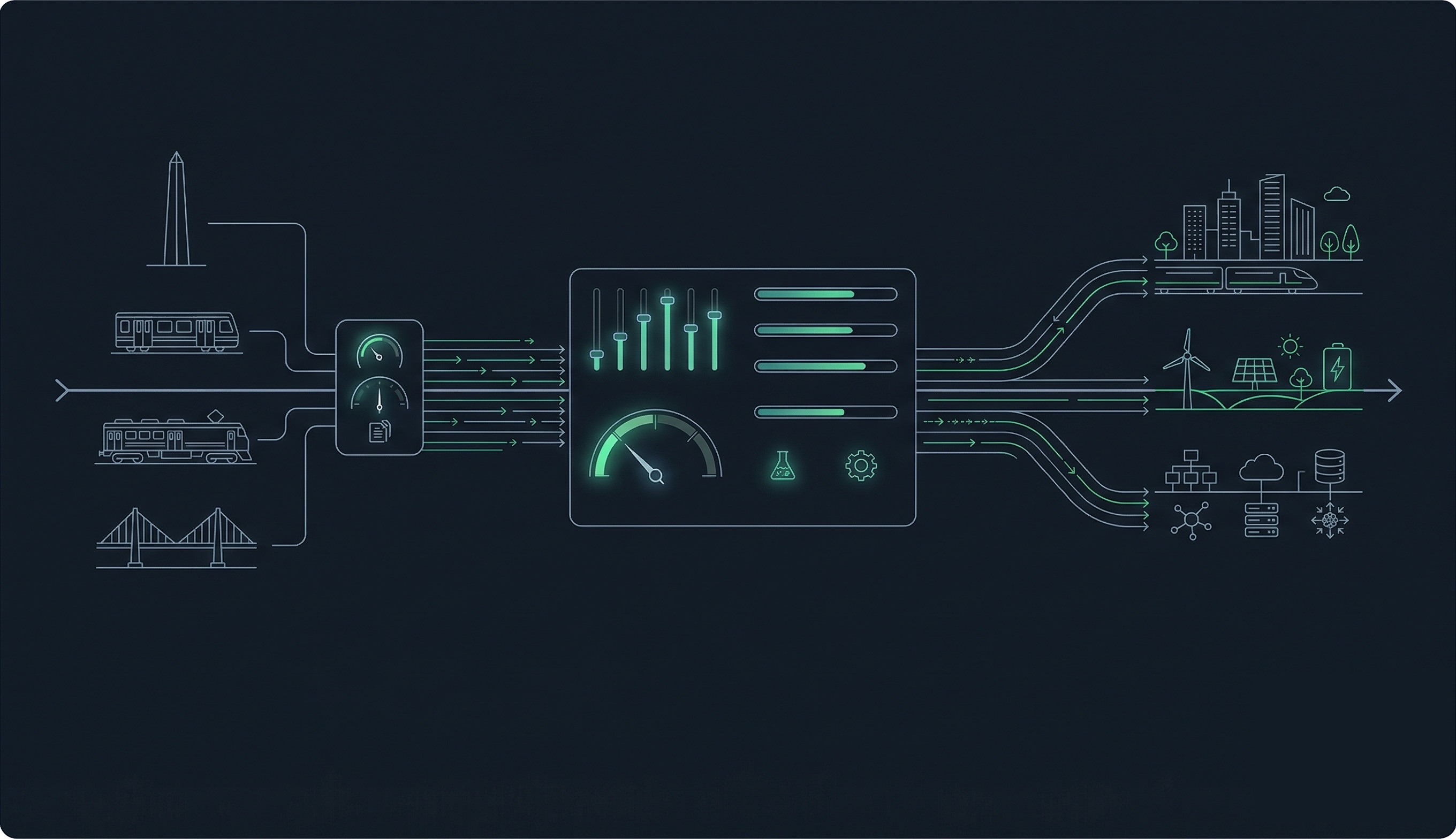
With this analysis, I open the first series of articles where we will look at reality through the lens of engineering, economics, and efficiency. My goal is not to convince you of an ideology, but to analyse the systems that underpin our world and find the optimisation points we currently ignore out of inertia or lack of incentives.
What to expect in upcoming pieces:
- Data before slogans: Every proposal will be backed by life-cycle analysis, balances, or economic logic.
- Real problems, viable solutions: From energy and transport to waste management and urban development, always under the premise that sustainability is a boundary condition, not a luxury.
- Demystification: Less partisan politics, more applied scientific consensus.
If you want to understand the how of building an Argentina (and a future) worth being excited about, I invite you to follow this series, you may subscribe to get the latest updates below. The world is not static; we imagined and built it, and now it is our turn to optimise it.